
What is retail capture rate?
Capture rate is the share of passers-by who actually walk into your store. If 1,000 people pass your entrance in an hour and 80 of them come in, your capture rate is 8 percent. It is the one metric that turns raw footfall into something you can act on: footfall counts how many people went past, capture rate tells you how good your storefront, window, and offer were at pulling them in.
Capture rate sits one layer up the funnel from conversion. Retailers who push conversion while ignoring capture rate often miss that a conversion bump came from fewer, more-qualified entries, not from genuine merchandising lift. Without capture rate, sales-per-visitor and conversion rate are unfalsifiable: you cannot tell a window-display win from a footfall slump.
How to calculate capture rate
The formula is simple:
Capture rate = (people who entered ÷ people who passed by) × 100
The hard part is the denominator. You need two counts over the same window: a footfall counter accuracy measurement at the entrance for entries, and a pass-by count of people walking past the storefront. Most retailers have the first and not the second, which is why capture rate stays a blind spot.
Worked example. A high-street store records these counts between 1pm and 2pm:
- Pass-by traffic in front of the storefront: 1,200 people
- Entries through the door: 96 people
- Capture rate: 96 ÷ 1,200 = 8 percent
Edge cases that quietly distort the number:
- Multiple entrances. Sum entries across every door, or you undercount and report a falsely low capture rate.
- Side entrances off a quieter street. The pass-by denominator differs per entrance, so a single store-wide rate can hide a strong main door and a dead side door. Measure per entrance where the streetscape differs.
- Staff and deliveries. Exclude staff entries and back-of-house traffic, or your rate drifts up artificially.
- Re-entries. A shopper who steps out and back in is one visit, not two. Bidirectional counting with a short de-bounce window handles this.
What a good capture rate looks like
There is no universal target. Capture rate reflects three things at once: the breadth of your offer, your brand strength, and the competition around you. A destination flagship on a busy high street will usually post a lower capture rate than a convenience format on a quiet parade, because high-footfall locations carry more passers-by who were never your customer.
That is why the only benchmark that means anything is your own network and your own trend. Compare a store against comparable stores in the same estate: if similar stores cluster around one figure and one branch sits a couple of points below it, that gap is the opportunity, not a failure grade. A capture rate that is stable or rising over time is the real health signal; a slow decline is an early warning that shows up before sales reports do.
Treat any single cross-industry percentage you see quoted as directional at best. The useful question is not "what is the average" but "is mine moving in the right direction against stores like mine."
The 4 things retailers track instead, and why they mislead
- Foot traffic in front of the store. Pass-by volume on its own says nothing about how well you convert attention into entries. A pitch with huge footfall and a weak window can look healthy and perform badly.
- Passing vehicles. A car count is not a shopper count. It rewards location, not merchandising.
- Entries with no denominator. Counting entries alone is footfall, not capture. Entries can rise simply because more people passed, with your storefront doing none of the work.
- Conversion rate without capture rate. Conversion measures what happens after entry. Optimise it in isolation and you can post a higher conversion rate on a shrinking, self-selected trickle of visitors while overall sales fall.
How to instrument capture rate without collecting personal data
Capture rate needs counting, not identification, and no camera. Ariadne measures this with Hybrid Fusion, its patented camera-free method. Time-of-Flight depth sensing counts every visitor at the entrances, capturing geometry rather than images, while patented phone signal sensing follows movement through the interior, detecting the signals a phone emits even in airplane mode. The sensor streams both feeds to Ariadne, where Hybrid Fusion combines them into one trajectory per visit and computes counts, dwell, and paths. The streams carry no identifier: no MAC address, no device ID, no biometric data, and no camera is involved. Identifiers are stored only when a visitor explicitly opts in, which keeps the method GDPR-friendly and outside biometric territory.
A working setup has three parts:
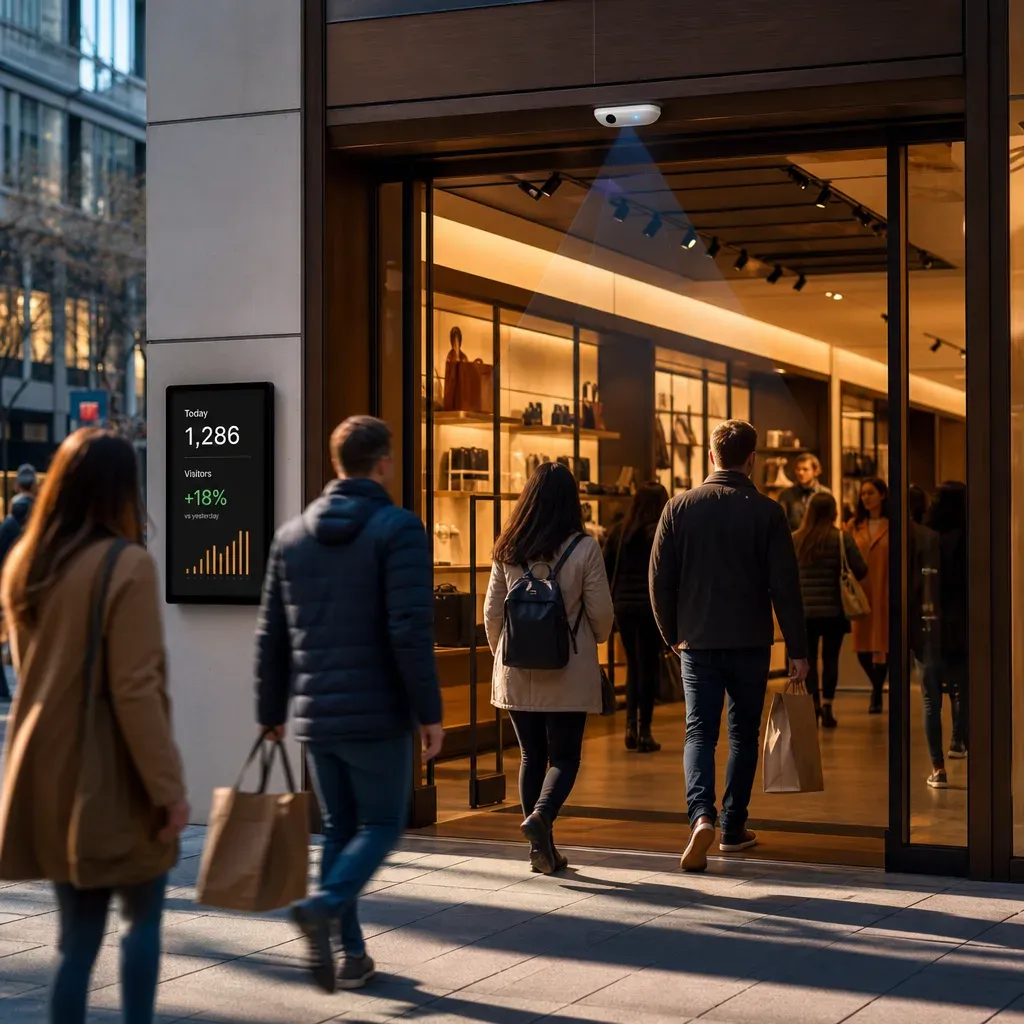
- An entrance counter for entries, mounted overhead and tuned for bidirectional counting so exits and re-entries do not inflate the number.
- A pass-by counter aimed at the storefront frontage to count people walking past, giving you the denominator most retailers lack.
- Controls for weather and seasonality, because rain, school holidays, and event days move both numbers. Compare like-for-like windows, not raw days.
With both counts in place, capture rate becomes a live operating metric you can read alongside in-store shopper flow to see not just how many people you pulled in, but where they went next.
A worked example: a fashion retail customer of Ariadne
Consider a fashion retail customer of Ariadne, a footwear and apparel store on a busy high street. It tracks conversion religiously and is pleased, with conversion holding steady month after month. But sales are flat.
When the branch adds a pass-by counter, the picture changes. Pass-by traffic in front of the storefront holds at roughly 1,500 people an hour, but entries have slipped from about 120 to 90 per hour over two quarters. Capture rate fell from around 8 percent to 6 percent while conversion stayed flat, which means the store was converting a shrinking pool of visitors just as well as before. The leak was at the window, not the till.
Acting on capture rate, the team reworks the window scheme and moves its highest-pull category into the sightline from the street. Entries recover toward 120 an hour against the same pass-by traffic, lifting capture rate back toward 8 percent. Conversion did not need fixing; capture rate did. That is the diagnosis you cannot make without the denominator.
Capture rate vs conversion rate vs sales per visitor
These three metrics answer different questions and only make sense together:
- Capture rate = passers-by who enter. Measures the pull of your location and storefront.
- Conversion rate = visitors who buy. Measures what happens inside, once someone is through the door.
- Sales per visitor = revenue ÷ visitors. Measures the value you extract per entry, blending conversion and basket size.
Read in sequence they localise a problem. Falling capture rate points at the frontage and offer. Steady capture but falling conversion points at layout, range, or staffing. Steady conversion but falling sales per visitor points at pricing or basket. A retail conversion measurement platform that captures all three on the same anonymous count is what makes the diagnosis fast instead of guesswork.
FAQ
What is a good capture rate for a retail store?
There is no universal figure. Capture rate varies with location footfall, competition, and format, so the meaningful benchmark is comparable stores in your own estate and your own trend over time. Stable or rising is healthy; a steady decline is an early warning.
How is capture rate different from footfall?
Footfall is a raw count of people who passed or entered. Capture rate is the ratio of entries to pass-by traffic, so it measures how effective your storefront is at converting passers-by into visitors. Footfall can rise while capture rate falls.
Do I need cameras to measure capture rate?
No. Ariadne counts with Hybrid Fusion: Time-of-Flight depth sensing plus patented phone signal sensing, never cameras. Time-of-Flight captures geometry rather than images, and signal sensing captures no MAC address by default, so the measurement involves no video, no faces, and no biometric data.
Why did my conversion rate rise while sales fell?
Often because capture rate dropped. If fewer, more-qualified people enter, conversion can look better on a smaller base while total sales decline. Tracking capture rate alongside conversion exposes this.
How do I measure pass-by traffic?
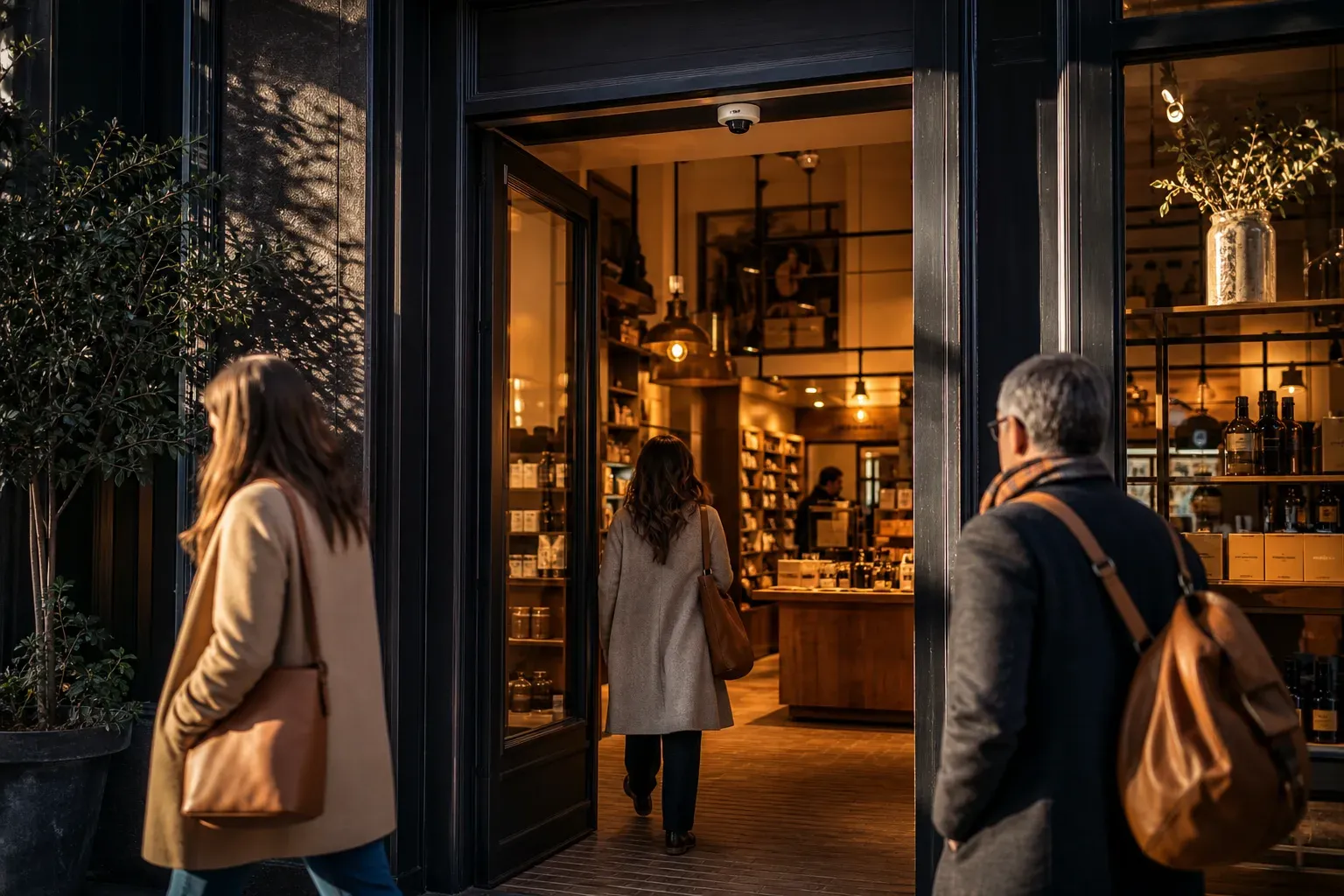
With a counter aimed at the storefront frontage that counts people walking past, run over the same time windows as your entrance counter. The pass-by figure is the denominator most retailers are missing.


